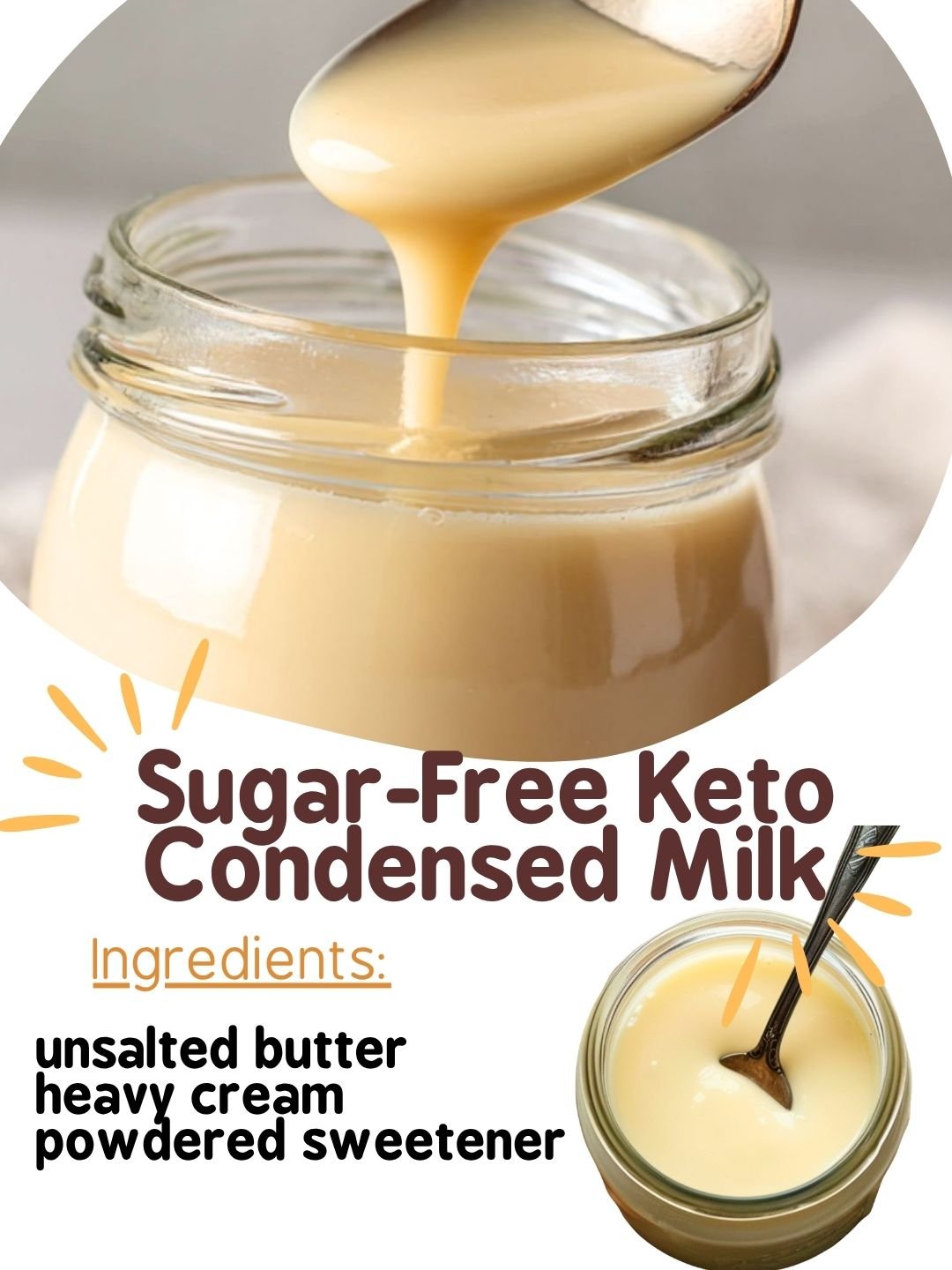
Choosing the right sweetener is essential for achieving the smooth, creamy texture that condensed milk is known for. Some low carb sweeteners work much better than others, especially when heated and cooled.
Allulose (Best Choice)
Allulose is the best sweetener for keto condensed milk. It dissolves easily, doesn’t crystallize, and creates a thick, syrup-like consistency very similar to traditional sugar-based condensed milk. It stays smooth even after chilling and works perfectly in desserts, sauces, coffee, and ice cream recipes.
Monk Fruit (Non-Erythritol Based)
If using monk fruit, make sure it is not blended with erythritol. Pure monk fruit sweetener or monk fruit blended with allulose works well and provides clean sweetness without affecting texture.
Sweeteners to Avoid
Do not use erythritol-based sweeteners for condensed milk. Erythritol tends to crystallize as it cools, which can cause a gritty texture and harden the condensed milk after refrigeration. This makes it unsuitable for sauces, drinks, and recipes that need a smooth consistency.
Liquid stevia is also not recommended, as it can taste bitter and does not provide the body or thickness needed for condensed milk.
How to Store Keto Condensed Milk
Store your keto condensed milk in a clean, airtight glass jar in the refrigerator. Once chilled, it will thicken further and develop its final creamy texture.
Properly stored, sugar-free keto condensed milk will keep well in the fridge for up to 7 days. Give it a quick stir before using, as slight separation can occur.
This keto condensed milk is not ideal for freezing, as freezing can affect the smooth texture once thawed. For best results, make small batches and store them refrigerated.