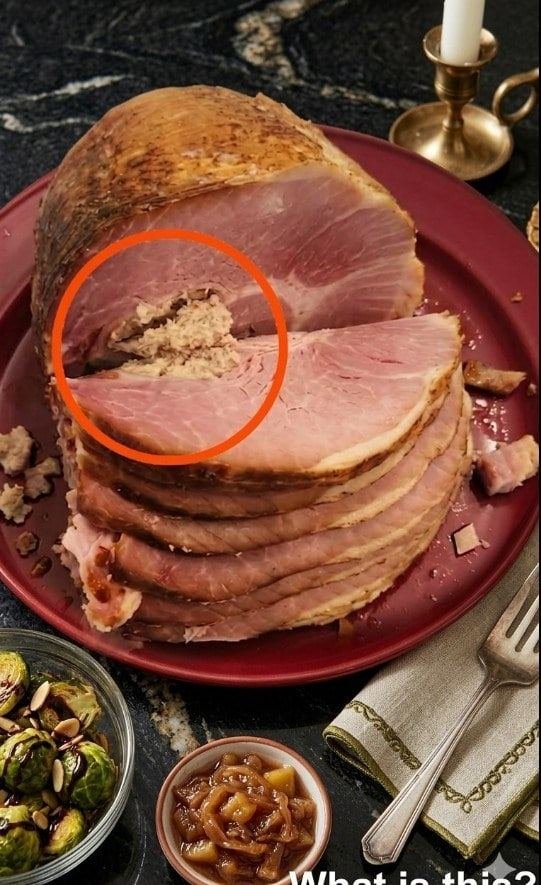
Strange Marks on Ham Explained: What You Should Know
You’re standing in your kitchen, about to prepare a meal. Maybe it’s a weekend breakfast, a holiday dinner, or just a quick sandwich after a long day. You unwrap a package of ham, glance down—and pause.
There they are.
Odd spots. Lines. Maybe tiny holes or rainbow-like sheens. Something about it feels… off.
For a second, your mind jumps to the worst-case scenario: Is this spoiled? Is it safe to eat?
If you’ve ever had that moment, you’re not alone. Strange marks on ham are surprisingly common, and while some are completely harmless, others can signal that something isn’t right. Knowing the difference can save you from unnecessary worry—or help you avoid a real food safety issue.
Let’s break it down clearly, so you know exactly what you’re looking at the next time it happens.
First: What Is Ham, Really?
Before diving into the marks themselves, it helps to understand what ham is.
Ham is pork that has been preserved through curing, smoking, or both. The curing process involves salt, sometimes sugar, and often nitrates or nitrites, which help preserve the meat and give it that familiar pink color.
Because of this processing, ham behaves a little differently than fresh meat. Its texture, color, and even smell can vary depending on how it was prepared—and that’s where many of these “strange marks” come from.
Common Types of Marks on Ham (and What They Mean)
Let’s go through the most common things people notice—and whether they’re harmless or a cause for concern.
1. Iridescent or Rainbow-Like Sheen
This is one of the most alarming-looking effects.
You slice into ham and suddenly see shimmering colors—greens, blues, even purples—reflecting off the surface.
It looks unnatural. Almost chemical.
But here’s the truth: it’s usually harmless.
This effect is caused by light reflecting off the muscle fibers and fat layers in the meat. When the surface is cut in a certain way, it can refract light much like a CD or soap bubble.
What to know:
It does not mean the ham is spoiled
It’s purely a visual effect
It’s more common in processed or sliced ham
If everything else seems normal—smell, texture, expiration date—you’re likely fine.
2. Small White Spots or Crystals
Sometimes you’ll notice tiny white dots or grainy patches inside the ham.
At first glance, they might look like mold—but they’re usually not.
These spots are often crystals formed from amino acids like tyrosine, which naturally occur during the curing and aging process.
They’re especially common in:
Dry-cured or aged hams
Higher-quality, longer-aged products
What to know:
They are safe to eat
They’re actually a sign of aging and flavor development
They may add a slightly crunchy texture
Think of them as similar to the crystals you sometimes find in aged cheese.
3. Dark Spots or Bruise-Like Marks
Dark patches can be a bit trickier.
These marks may appear as:
Deep red or brown spots
Uneven discoloration
Areas that look almost bruised
In many cases, this comes from blood pooling during processing or minor damage to the muscle tissue.
What to know:
If the smell is normal, it’s often safe
These spots don’t necessarily indicate spoilage
You can cut around them if they bother you
However, if the dark areas are accompanied by a sour smell or slimy texture, that’s a different story (we’ll get to that shortly).
4. Tiny Holes or Pitted Surfaces
Occasionally, ham may have small holes or an uneven, slightly spongy texture.
This can happen during:
Injection curing (where brine is pumped into the meat)
Mechanical tenderizing
Processing and shaping
What to know:
It’s usually a result of manufacturing
It doesn’t automatically mean the ham is unsafe
Texture may feel slightly different but still edible
If the holes look excessive or are paired with unusual odor or stickiness, it’s better to be cautious.
5. Slimy or Sticky Surface
Now we’re moving into warning territory.
If your ham feels:
Slimy
Sticky
Coated with a film that wasn’t there before
This is often a sign of bacterial growth.
Even if the ham doesn’t smell terrible yet, this texture change is a red flag.
What to do:
Do not eat it
Discard it immediately
This is one of the clearest indicators that the ham has gone bad.
6. Green or Gray Discoloration
Unlike the harmless rainbow sheen, flat green or gray patches are not a good sign.
This type of discoloration can indicate:
 Strange Marks on Ham Explained: What You Should Know
Strange Marks on Ham Explained: What You Should Know You’re standing in your kitchen, about to prepare a meal. Maybe...
Read More → Amish Baked Custard !!
Among the many classic desserts out there, custards are one of the most pleasing. They’re easy to eat and have...
Read More → Peach Pie Cruffins Twist
These golden, flaky pastries deliver bakery-quality results using simple store-bought crescent dough filled with luscious peach pie filling. Each spiral...
Read More → Homemade Caramel Frappuccino
Ingredients Frappuccino 2 cups ice cubes 1 cup brewed strong coffee cooled 1 cup whole milk 2 tablespoon caramel sundae syrup or topping Whipped cream Equipment Blender Method
Read More → Cooked this salmon and weird white stuff exploded out of it. Are these worms?
Cooking salmon is a delightful experience for many home chefs and seafood lovers. The rich flavor and tender texture of...
Read More → I bought Cod in ALDI and Tried Cod in Air Fryer, Guys!! I think I finally got this recipe down to perfection!
In the pantheon of quick and healthy weeknight dinners, a perfectly cooked piece of fish holds a place of honor—a...
Read More →